

What Kind Of Epoxy To Repair Aquarium Glass
Aquarium Safe Epoxy – Learn how to apply Resin for your Aquarium
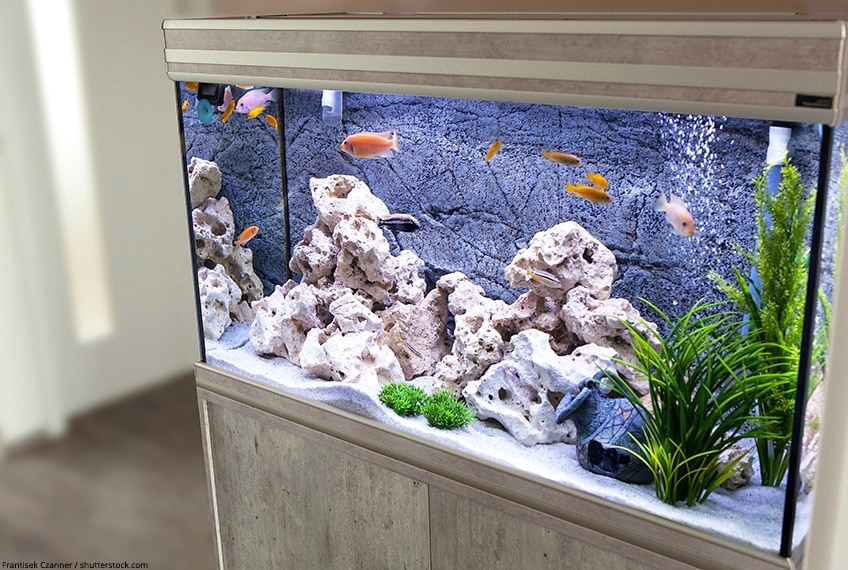
If you would like to do something good for your fish and offer them a niggling variety, attempt a landscape fabricated of polystyrene and epoxy resin in the aquarium. With a niggling skill and the right epoxy resin for your aquarium, you tin plow your ideas into reality in no time at all and even protect the underwater world from signs of wear and tear. How this works and what y'all need to consider when using epoxy resin in aquariums is explained in our guide.
Inhaltsverzeichnis
- one Applications of epoxy resin in the aquarium
- two Advantages of sealing with epoxy resin in aquarium construction
- iii The suitable epoxy resin
- 4 These materials in the aquarium can exist sealed
- 5 Instructions for the sealing of objects in the aquarium
- 5.1 Mix epoxy resin
- 5.2 Apply by brush
- v.3 Notice curing time
- 6 Safe instructions for working with epoxy resin
Applications of epoxy resin in the aquarium
Epoxy resin non simply plays a representative part in the aquarium by being used for the cosmos of impressive landscapes. It tin do much more:
- Epoxy resin in the aquarium finer seals all surfaces and makes them waterproof
- With a combination of polystyrene and epoxy resin, y'all tin can create not only varied landscapes for the aquatic life in the aquarium, but also pocket-sized caves and stone formations as refuges on the back wall
- Epoxy can also exist used to glue dissimilar parts together
- Even shiny waterfalls can be modelled with it
- Yous can also make complete surfaces very interesting by sprinkling coarse sand, gravel or quartz stones onto the nonetheless wet epoxy resin.
Advantages of sealing with epoxy resin in aquarium construction
- The wellness of your fish and other aquarium inhabitants should be protected. Sometimes dangerous bacteria nest in the h2o and endanger the fish population. Then the aquarium must be cleaned laboriously. Nevertheless, epoxy resin protects the sealed surfaces from potential pathogens. It massively improves the water quality past keeping harmful influences abroad.
- Fifty-fifty the moisture that would normally set on the design elements subsequently some fourth dimension tin be finer combated in the aquarium past sealing with epoxy resin. Used correctly, epoxy protects all surfaces from the cool wet.
- Moss has no risk against epoxy in the aquarium – information technology keeps all surfaces sealed with information technology free of unwanted plants. This is a great reward for the possessor of the aquarium, as he does not take to clean it extensively.
- Another advantage is the high UV resistance of the epoxy resin. Particularly if your aquarium is located in a particularly light-flooded room, it is an reward to protect the surfaces with a suitable agent. This tin be epoxy, as it keeps harmful UV rays away from the sealed surfaces.
- Furthermore, epoxy is not only scratch-resistant, only also bear on-resistant and resistant to all brute excrements and is therefore ideally suited to withstand high loads. The surface of the hardened epoxy resin is completely polish and can therefore be easily disinfected or cleaned if necessary.
- The last big advantage is the compatibility with various additives such equally fillers and colorants, because with the help of these you tin can create the almost various landscapes the way the user wants them. Whether you desire to class a smooth or a seemingly moss-covered stone face, dark stones or calorie-free chalk cliffs or mayhap even one or the other statue – everything is possible with the right epoxy resin for the aquarium, some styrofoam and a good hand.
The suitable epoxy resin
Special terrarium resins are offered, which are perfectly suited for sealing surfaces. They are also a good option for the aquarium.
Even so, they are much more expensive than the common laminating resins. However, they are completely sufficient for sealing in the aquarium, because cured they non but have all the positive backdrop of a terrarium resin, simply are as well non-toxic. They do non emit any harmful substances that could harm aquatic life in whatever way.
Yous can therefore hands utilise a commercially available laminating resin, which can be applied with a brush:

- Loftier-quality starter set for Resin Art
- Thicker constistency, i:ane mixing ration for easy utilize
- 45 minutes of working time untill information technology starts to go glutinous, almost no yellowing
View on Amazon
These materials in the aquarium tin be sealed
In principle, epoxy is suitable for all believable materials. Nonetheless, the user can benefit from epoxy resin on polystyrene when building an aquarium. Styrofoam can be easily modelled, coloured and then sealed with epoxy resin. The epoxy resin does not attack the styrofoam and information technology keeps its shape.
But other materials can also be sealed with epoxy resin. For example, the resin is also ideal for sealing wood. In this case, however, yous should pay attention to the consistency of the epoxy used, every bit it is available in both thin and thick-bodied versions. Your option depends on the textile to be sealed. If this is porous, an epoxy organisation with a loftier penetration force should be chosen. Medium and high viscosity epoxy resin systems, on the other hand, are peculiarly suitable for smooth surfaces.
Apart from that, epoxy is in principle an all-rounder, which unfolds its positive properties on almost all materials.
Instructions for the sealing of objects in the aquarium
Sealing objects with epoxy resin for the aquarium is not witchcraft. Even if you are a rather inexperienced craftsman, you will succeed with our pace-past-step instructions.
Mix epoxy resin
First you have to mix the epoxy resin according to the package insert. Make sure that the correct mixing ratio of resin and hardener is used. If this is not observed, the curing may be bereft. The resin will remain sticky and cannot develop its positive backdrop; in addition, harmful substances may be released. Epoxy is only harmless when fully cured.
Put the resin and hardener in a large container and stir thoroughly. If necessary, you can repot the mixture and stir again to brand a specially thorough mixture. Call up to brush forth the border and lesser of the container several times to ensure that the ii components are perfectly mixed.
After mixing, the then-called pot life begins. Now y'all should work speedily, because this is limited. Later on the epoxy resin is hardened and cannot be candy farther. In instance of incertitude you should always mix only a little epoxy and later, if necessary, more of it. The libation the room in which y'all work, the longer the pot life.
Apply by brush
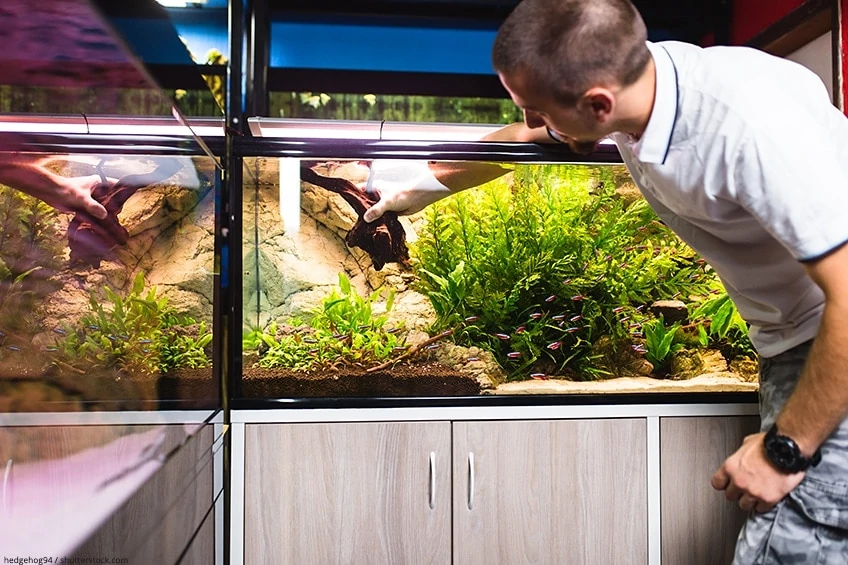
Now apply the epoxy resin with a brush to the surfaces to be treated. These can exist different rock formations or objects for the aquarium, but also flat structures or a back wall. These were previously modelled from polystyrene and coated with tile adhesive to create lifelike landscapes or objects.
When sealing with epoxy resin, make sure to employ a thin layer to avoid unsightly lumps on the surface. Nonetheless, each area should exist thoroughly coated with the resin to ensure that the sealant is applied correctly. This is followed by the curing stage.
Observe curing time
One time the epoxy resin is fully cured, information technology no longer releases any harmful substances. However, the difference between the drying phase and the curing phase is important. The latter takes considerably longer. But when this has been observed should the surfaces sealed with epoxy resin be used in an aquarium. It is all-time to follow the manufacturer's instructions.
Please note that the curing time can vary considerably depending on the ambient temperature and humidity. If in doubt, information technology is meliorate to give the epoxy resin a niggling more time – the health of your fish will thank you.
Safety instructions for working with epoxy resin
When working with epoxy resin, disposable gloves as well as a breathing mask and, if necessary, safety goggles must be worn. Ensure that the workplace is adequately ventilated or work outdoors. Long-sleeved article of clothing is besides recommended. Open burn is to be avoided at all costs!
Should the resin come up into contact with your skin, wash it off immediately and thoroughly with warm water. In instance of contact with your mucous membranes or your optics, consult a md immediately! Accept the bundle insert with you lot so that he can get an idea of the ingredients.
The design of an aquarium is not only suitable for professionals, but too for untrained craftsmen who simply bask modelling. Your aquatic inhabitants will certainly relish their new landscape with epoxy resin on styrofoam.

What Kind Of Epoxy To Repair Aquarium Glass,
Source: https://resin-expert.com/en/guide/aquarium-safe-epoxy
Posted by: joneshaviculd62.blogspot.com
0 Response to "What Kind Of Epoxy To Repair Aquarium Glass"
Post a Comment